


 Market
What the 2026 FIFA World Cup is revealing about the Brazilian sports betting market
André Moreira
The FIFA World Cup has always been one of the biggest stress tests for the sports betting industry. Beyond increasing betting volumes, it reshapes user behavior, accelerates customer acquisition, and creates unique engagement opportunities throughout the tournament.
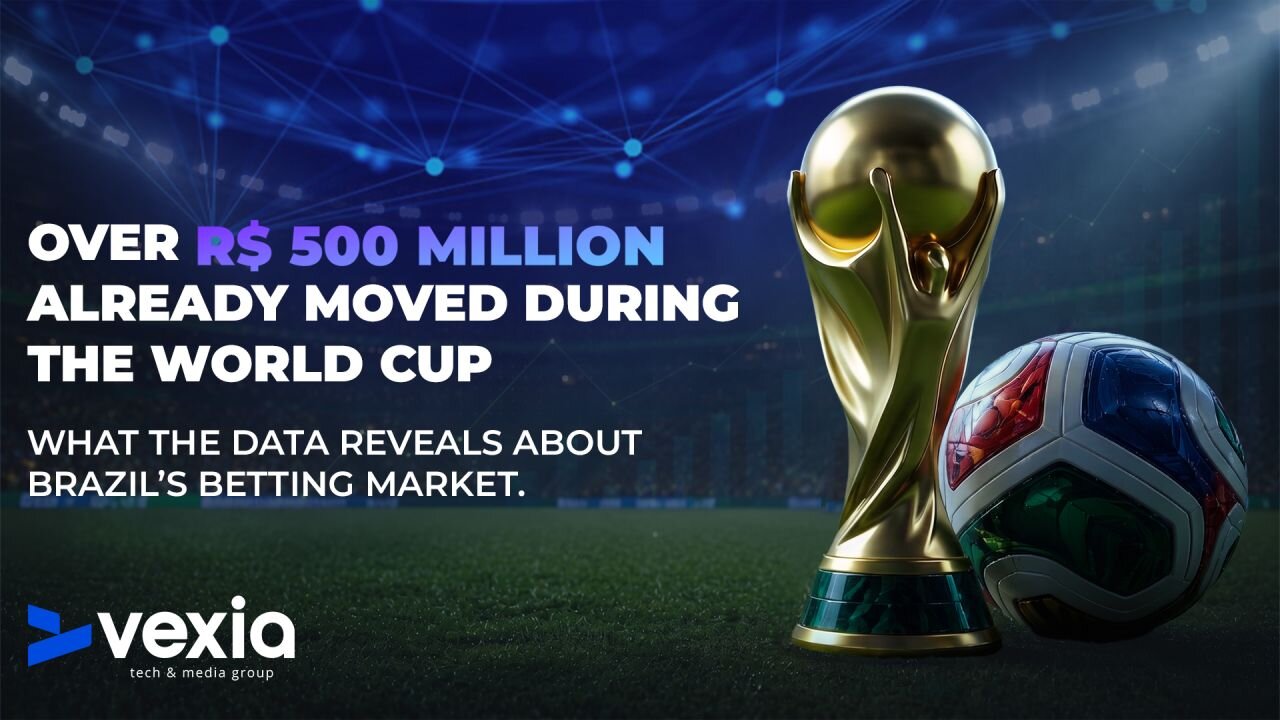
Recent data from Klavi, based on anonymized Open Finance information from a sample of 1.2 million Brazilians, provides valuable insights into how the regulated Brazilian betting market is evolving during the World Cup.
Rather than focusing solely on betting volume, the data highlights broader behavioral trends that are particularly relevant for operators, affiliates, CRM teams, and marketing professionals.
1. Average deposit values increase during major sporting events
One of the clearest findings is the growth in the average amount transferred to licensed betting operators.
Before the World Cup, the average deposit stood at R$188. During the tournament, that figure increased significantly, reaching peaks above R$270 on some matchdays.
This suggests that major sporting events do more than attract new users—they also encourage existing customers to become more active and increase their spending.
For marketing and CRM teams, this reinforces the importance of personalization, customer retention, and lifecycle strategies during high-engagement periods.
2. The Brazilian National Team continues to drive market activity
Another clear trend is the direct relationship between Brazil’s matches and betting activity.
Both transaction volume and user participation consistently rise whenever the Brazilian National Team takes the field.
For media buyers, content teams, and CRM specialists, the implication is straightforward: campaigns synchronized with the match calendar are far more likely to capture users at moments of peak intent.
Timing remains one of the most valuable competitive advantages in sports betting marketing.
3. The World Cup expands participation—not just spending
Perhaps the most interesting finding is that the tournament is bringing more people into the regulated betting ecosystem.
According to Klavi’s data, 34.8% of the analyzed sample made at least one transfer to a licensed betting operator during the World Cup, compared with 11% before the tournament.
This demonstrates that major sporting events significantly expand user participation, creating opportunities not only for acquisition but also for long-term customer retention.
The real challenge begins after the tournament ends.
4. Regulation is proving to be a growth enabler
Another important aspect of the study is that it tracks transactions exclusively involving licensed operators.
The growing volume of transactions processed through regulated platforms reinforces an important message: regulatory compliance and consumer protection are not barriers to market growth.
Instead, they provide the trust, transparency, and legal certainty required for the industry to mature sustainably.
Beyond betting volume: understanding user behavior
The World Cup continues to be one of the strongest acquisition and engagement catalysts in the sports betting industry.
However, in an increasingly competitive and regulated market, sustainable competitive advantage will depend less on promotional offers and more on the ability to interpret data, personalize customer experiences, optimize campaigns, and build long-term trust.
The World Cup will end in a few weeks.
The behavioral insights it generates, however, will continue shaping acquisition, retention, and engagement strategies long after the final whistle.
How has the 2026 FIFA World Cup impacted your acquisition, retention, or engagement metrics? I’d be interested to hear your perspective in the comments.
Share Article